

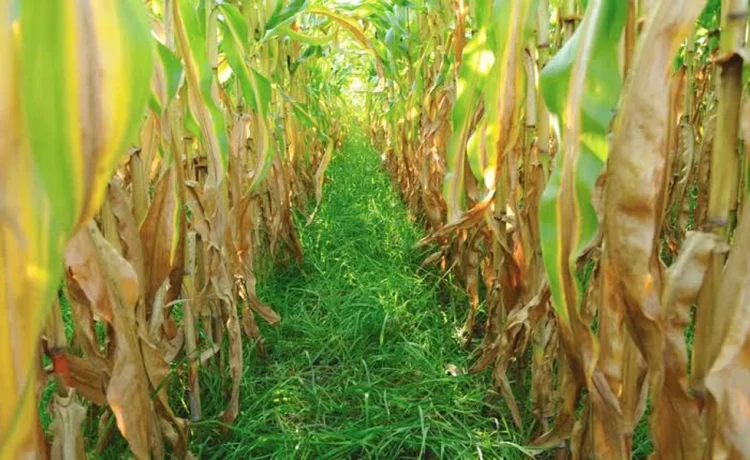
In addition to acting as mulch and a source of green manure and organic matter, cover crops also help prevent soil erosion, control moisture, attract pollinators, help manage weeds and pests, and be used for grazing or fodder. Cover crops either absorb or provide nitrogen, depending on their nature.
For gardeners looking to improve soil quality while making better use of available garden space , Crops Gardens Guide strategies can include selecting cover crops according to the season, soil condition, and needs of the following plants. Fast-growing options can be sown between growing cycles to protect bare soil, while legumes can contribute nitrogen and grasses can add organic matter when incorporated into the soil. Gardeners should also consider how quickly each crop grows, how much moisture it requires, and how easily its residue breaks down before planting. Choosing the right species and managing them at the appropriate stage allows cover crops to support healthier soil, reduce weed pressure, and prepare garden beds for productive future crops.
Define cover crops.
These are shrubs used to cover soils for particular purposes, as the name suggests. They are not farmed for feeding or human consumption, in contrast to primary species, but rather to meet the needs of secondary farmers. They feed the livestock, increase production, and enhance the health of the land. It does not, however, imply that these plants constitute unique species. They can also be found on the plate (such as corn or buckwheat) and function as cash crops in other contexts. The distinction is that these plants are utilized as grasses in fall cover crops.
Farmers plant them consistently or in rows, depending on the season-fall or late spring/summer. Crop residue management and removal are necessary for some, while others are winter-killed. Additionally, they recommend a single species or a combination of them. It is said that the latter approach yields more fruitful outcomes. Legumes, brassicas, turnips, radishes, and grasses (forage grains) are examples of common cover crops.
Organic farming, no-till farming, and crop rotation all greatly support this technique. Making informed selections is aided by smart farming online tools.
Welfare of cover crops.
Agriculturalist shrub covers crops to enhance soil for particular purposes.
Soil well-being and fertility.
Cover crops’ roots aid in preventing wind and water erosion. Certain species are able to transform nutrients into forms that are easier for other crops to absorb. As part of integrated weed management, farmers apply mulch and plant cover crops between rows. Additionally, pollinators are drawn to blossoming inter-row species. Both deep-rooted and shallow-rooted cover crops improve aeration and address compaction by penetrating the soil at different depths.
Nitrogen enhancement.
The soil-dwelling rhizobia bacteria, formerly known as Agrobacterium, are the process mediators on the roots of cover crops that fix nitrogen in a symbiotic relationship. The bacteria then obtain carbohydrates from the legumes. When bacteria or nitrogen-fixing cover crops die and disintegrate, the nutrient is primarily released. Although Rhizobium radio bacter, the group representative, causes infections in humans, Rhizobium also reduces root problems in plants.
The independent cyanobacteria family is another biological option for converting air nitrogen into soil nitrogen. Otherwise, nitrogen is industrially reduced during chemical synthesis to forms that plants can consume.
Choosing and directing cover crops.
The type and sequencing of the culture determine which one to plant. Legumes, for instance, are good sources of nitrogen for later cash crops. Therefore, when nitrogen levels are saturated, farmers shouldn’t seed them.
The amount of time needed for appropriate breakdown of cover plants is another factor to take into account. Buckwheat residue, for instance, composts more quickly than sorghum or barley.