

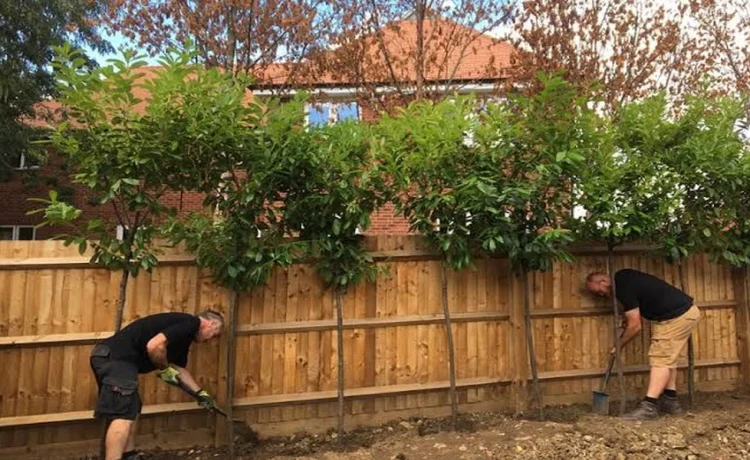
There is a point every autumn when I start noticing fences differently. The ground stays damp in the morning. Leaves collect against gravel boards. The first proper winds arrive, and fence panels that seemed perfectly solid through summer suddenly start rattling. After decades working with fencing, I have learned that September and October are probably the best months to inspect a boundary. If something is beginning to fail, autumn tends to expose it before winter finishes the job. A quick look at your garden fencing now can prevent a much larger repair after the first serious storm.
The key word there is “beginning”.
You are not looking for a fence lying across the lawn. By then, the inspection is rather pointless.
You are looking for the slight lean, the loose post, the soft patch of timber and the gate that suddenly needs lifting a fraction before the latch closes.
Those little changes tell an experienced fencing contractor far more than a completely collapsed panel ever will.
Summer can hide a surprising amount of damage
Dry summer weather is kind to weak fencing.
The ground firms up. Timber dries. Gardens become less exposed to prolonged wind and rain. A post that moved noticeably in February can feel quite solid again by July.
That does not mean it has repaired itself.
I have been to plenty of York properties where somebody has told me, “It was wobbling last winter, but it seems fine now.”
Usually, it isn’t.
Once autumn rain gets into the ground, the movement returns.
This is especially noticeable where heavy soil holds moisture around the post foundations. York and the surrounding areas have plenty of clay-rich ground. Some gardens drain reasonably well, while others remain wet for days after persistent rain.
That change in moisture affects the soil surrounding the footing.
A marginal fence installation can therefore look perfectly acceptable during a dry spell and become unstable again once the ground softens.
That is one reason I would rather inspect an ageing fence in October than June.
Autumn tells the truth.
Start by looking along the fence, not at it
This is one of those little trade habits that homeowners can easily copy.
Do not stand directly in front of the fence and inspect each panel first.
Walk to one end and look along the top.
You will quickly spot posts that are beginning to lean or sections that have moved out of line. Sometimes the movement is only 20 or 30mm. That might not sound much, but on a fence that was originally straight it deserves investigation.
Then walk along the boundary and gently push each post.
Gently is important. You are checking it, not trying to knock it over.
A properly installed post should feel solid. Timber itself has a little flexibility, especially on taller fencing, but the base should not rock around in the soil.
If you can see movement where the post enters the ground, something is wrong.
It might be rotten timber.
It might be loose concrete.
It could be a footing that was too small from the beginning.
Occasionally the entire concrete foundation moves because the surrounding soil has become soft.
Whatever the cause, movement at the base rarely improves by itself.
Pay particular attention to the soil line
If I am inspecting timber posts, one of the first places I look is where the post enters the ground.
This is where many timber posts eventually fail.
People sometimes assume the buried section rots first because it sits underground. In reality, the vulnerable area is often around ground level where timber experiences repeated wetting and drying.
Probe any suspicious timber carefully.
You do not need specialist equipment. A screwdriver will tell you quite a lot. Sound timber should resist it. If the surface feels soft or begins breaking away easily, decay has started.
Do not be fooled by appearance either.
I have removed posts that looked absolutely fine from above. Once we started digging, the section immediately below ground level had narrowed dramatically through rot.
Sometimes there is barely anything left holding the post upright.
The surrounding fence panels are effectively supporting it.
That is the sort of problem autumn inspections catch before the wind does.
Wet leaves cause more trouble than people realise
Autumn leaves look harmless.
Against fencing, they can become a wet blanket that sits there for months.
Leaves collect behind sheds, around gravel boards, beneath hedges and in corners where homeowners rarely walk during winter. Once wet, that material holds moisture against timber.
Clear it away.
The same applies to soil, compost and bark.
I regularly see flower beds raised directly against timber gravel boards and fence panels. It is particularly common after gardens have been landscaped.
The planting might look lovely, but the arrangement is terrible for the fence.
Timber should not spend winter sitting against wet soil.
If you have beds running along a boundary, check that soil has not gradually built up against the fencing. A small gap improves airflow and makes it much easier to inspect the bottom of the fence.
These are simple maintenance jobs. They cost nothing apart from an hour in the garden.
Listen when the wind picks up
This sounds slightly odd, but listen to your fence.
Rattling tells you something.
A panel moving inside concrete post channels might need packing or adjustment. Loose feather edge boards make a different noise. Rails separating from posts can knock. A gate with worn hinges often starts banging long before it visibly drops.
On a windy autumn day, walk around the garden and watch what moves.
Some flex is normal.
A six-foot fence takes a fair amount of wind pressure, so expecting absolutely no movement is unrealistic. What you are looking for is movement concentrated in one post or bay.
If five panels barely move but the sixth is shaking around, investigate that section.
It is the odd one out.
One thing I see often on local jobs is a homeowner assuming the panel is the problem because that is the part visibly moving. Quite often, the weakness is actually the post supporting it.
Gates deserve their own inspection
I would always check gates separately.
They work harder than the rest of the fence.
Every time you open a gate, its weight pulls on the hinge post. Wind catches it. People slam it. Children hang from it. Timber expands when it gets wet and contracts when it dries.
By autumn, a marginal gate installation often begins showing its weaknesses.
Check whether the latch still meets cleanly.
Look at the gap around the gate. Is it even?
Has one corner dropped?
Does the bottom scrape?
Are hinge screws pulling out?
Then check the posts.
A dropping gate is frequently blamed on the hinges when the actual problem is a leaning hinge post. Adjusting the hinges might temporarily improve it, but you have not fixed the cause.
Wide timber gates need substantial support. Driveway gates need even more.
If the post is moving at ground level, sort that first.
Small repairs become expensive surprisingly quickly
This is probably the strongest argument for an autumn inspection.
Fence failures spread.
Imagine a run of six panels. One central post begins to move. Every time the wind hits the fence, that post moves slightly farther than the others.
The panels connected to it then pull against the next two posts.
Those posts start taking loads they were not originally carrying.
Fix the first post early and you have a relatively contained repair.
Ignore it for another winter and you may eventually have three damaged bays.
That is why fence repairs carried out before severe weather can be far less disruptive than waiting for a complete failure.
People searching for fence repair near me after a storm often assume the storm created all the damage in one night.
Sometimes it did.
More often, the wind found the weakest part of an existing problem.
Check the concrete as well as the post
Concrete posts remove the risk of timber rot, but that does not make them immune to trouble.
Look for cracks, particularly near ground level.
Check whether the entire footing moves when the post is pushed.
Concrete posts can also lean if their original foundations were too shallow or the surrounding ground has shifted.
I have seen fencing where perfectly good concrete posts had been installed into inadequate holes. The material was not the problem. The installation was.
This distinction matters.
People often become obsessed with which fencing material lasts longest. Timber versus concrete. Timber versus composite. Concrete versus steel.
The answer is less exciting than most product brochures suggest.
A well-installed system suitable for its surroundings usually performs better than an expensive system installed badly.
Typical post depth matters
For standard domestic fencing, around 600mm is a common starting point for post depth.
That is not a universal rule.
Fence height matters. Ground matters. Exposure matters. Post size matters. Gates create different loads again.
On particularly exposed runs, deeper or stronger foundations may be sensible.
This is why I become wary when people describe fence installation as simply digging a few holes and putting panels between them.
The holes are arguably the most important part.
Once the job is finished, nobody sees them.
Yet those holes decide how the fence behaves for years.
If an old fence repeatedly develops movement in the same location, do not assume replacing the panel will solve it. There may be an installation or ground problem underneath.
York’s ground can change within a short distance
Local ground conditions are rarely uniform.
I have worked on properties where the front garden digs beautifully and the rear feels completely different.
You can encounter clay, compacted fill, rubble, old brickwork and previous concrete footings within the same boundary.
Older York gardens are particularly good at hiding things.
You start digging where a post needs to go and discover the remains of a wall nobody knew existed.
Newer developments have their own problems. Landscaped topsoil can hide heavily compacted ground or construction debris beneath it.
This is why fencing contractors need to react to what they find rather than follow exactly the same method on every job.
A post hole is not automatically finished because it has reached an arbitrary depth. You need stable ground and a footing appropriate to the fence above it.
Look closely at timber panels
Autumn is also a good time to check the panels themselves.
Start with the rails.
On closeboard fencing, check where rails connect to posts. Loose connections can usually be spotted before they completely fail.
On lap panels, inspect the frame as well as the thin boards across the front. Once the frame begins rotting, patching individual boards achieves very little.
Look for:
Splitting rails
Loose boards
Dark patches that remain damp
Green growth in shaded areas
Warped timber
Rusting fixings
Broken panel frames
Damage around climbing plants
Do not panic about every crack.
Timber moves naturally. Small splits and checks are common as wood dries and ages. What matters is whether the split affects structural strength.
A fencing contractor who has handled timber for years can usually tell the difference quickly.
Ivy can be brutal on an ageing fence
I know people love ivy.
I also know what it weighs when it is wet.
Mature climbing plants can place enormous loads on old fencing. The leaves catch wind, stems work between boards and the whole mass holds moisture against timber.
If the fence underneath is strong, it may cope perfectly well.
If the posts are already marginal, a mature climber can be the final push.
Autumn is a good time to thin heavy growth and inspect what is actually happening behind it.
Do not simply rip established ivy from weak panels either. You may discover the plant has become part of what is holding them together.
I have seen that happen.
Cut it back carefully and assess the structure as you go.
Think about wind before replacing damaged sections
If the same area keeps failing, ask why.
Do not just install the same thing again.
Solid fencing catches wind. In sheltered gardens that is rarely a major issue, but exposed boundaries can behave differently.
A hit and miss design allows some airflow. Slatted fencing can reduce pressure too, depending on the spacing and construction.
Sometimes strengthening posts is enough.
Sometimes changing the fence design makes more sense.
This is where experienced fencing contractors earn their money. Repeating a failed design without considering why it failed is not much of a repair.
Autumn is also the time to check treatment
If timber fencing needs another coat of suitable treatment, do not wait until the middle of a wet winter.
The timber needs appropriate conditions to dry.
Pressure-treated timber already has preservative protection, but that does not mean it requires no attention forever. Surface treatments can help maintain appearance and reduce weathering, depending on the product and timber.
Dip-treated panels generally need more regular care.
Whatever you use, follow the product instructions rather than slapping treatment onto soaking wet timber because October has suddenly turned rainy.
Preparation matters.
Clean timber first. Let it dry sufficiently. Replace damaged boards before coating them.
Painting over rot achieves very little apart from making rotten timber a different colour.
Composite fencing still needs checking
Composite has become increasingly popular with homeowners who want less maintenance.
It removes several timber-related problems, but not every fencing problem.
Check posts for movement.
Check panel alignment.
Look at fixings.
Clear debris from the base.
Allow for any movement specified by the system.
People researching fencing composite fencing cost should consider installation quality alongside the purchase price. A low-maintenance panel attached to a poorly installed structure is still a poorly installed fence.
The same principle applies regardless of material.
Do not ignore drainage
If one part of your garden remains saturated every autumn, look at what that is doing to the boundary.
Standing water around posts is never ideal.
Sometimes the cause is obvious. Blocked drains, compacted soil, raised beds or landscaping changes can alter where water collects.
I have seen patios laid slightly too high so rainwater constantly runs towards a fence line.
The fencing contractor gets blamed when posts deteriorate, but the real problem is water management.
Fencing and grounds maintenance overlap more than people think. Hedges, trees, drainage, soil levels and hard landscaping all affect boundaries.
Fixing the source of persistent moisture may do more for the next fence than simply buying better panels.
Repair now or wait until spring?
If something is structurally weak, I would not deliberately leave it through winter.
Cosmetic jobs can wait.
A faded panel is not an emergency.
A slightly untidy gravel board can wait.
A rotten post supporting several six-foot panels is different.
Autumn winds will repeatedly load that weakness. Once a post fails, neighbouring sections can go with it.
If you are unsure, ask someone experienced to assess it. Searching for fencing contractors near me or a fence company near me will give you plenty of options, but ask specifically whether repair is practical.
Not every ageing fence needs replacing.
I have repaired fences that went on for years afterwards.
I have also inspected fences where another patch would simply waste the homeowner’s money.
Knowing which situation you have matters.
Be wary of repeated patch repairs
There comes a point where repairing an old fence stops making financial sense.
One new post this year.
Two panels next year.
Another post the year after.
A new gate.
Three rails.
Eventually you realise half the fence has been rebuilt one emergency at a time.
If several posts show decay and the panels are approaching the end of their useful life, replacing a complete run can be more sensible.
This is especially true if the original installation was poor.
A fresh fence installation gives you the chance to correct post depth, improve gravel boards, change materials and deal properly with ground issues.
Do not replace something merely because it looks old.
But do not keep feeding money into a structure that has clearly reached the end either.
What I would check before the first serious winter storm
My autumn inspection is straightforward.
I look along the fence line first.
Then I test the posts.
I inspect timber at ground level.
I check rails and panel frames.
I look at gravel boards.
I clear leaves and soil away from the base.
I inspect gates and hinges.
I check heavy climbing plants.
I look for water collecting around posts.
Then I think about exposure.
You can do most of that yourself in half an hour.
If something looks questionable, take a closer look while the weather is still manageable.
For larger problems, established fencing services in York can cover everything from individual repairs to replacement fencing, gates and more substantial boundary work. The useful part is getting the problem identified before winter decides the timetable for you.
That last point matters.
There is never a convenient morning to find three fence panels lying across the garden.
It usually happens during horrible weather, just as the dog needs letting out, when contractors across the city are receiving the same calls from everyone else.
Autumn gives you the chance to get there first.
Walk the boundary while the leaves are falling. Give the posts a gentle push. Check the gate. Look closely at anything that has moved since summer.
A fence rarely fails without warning.
Most of the time, we simply were not looking when it started.