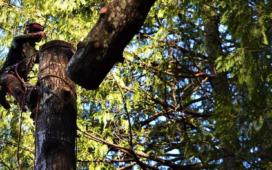


Trees are one of the most valuable things a Gold Coast property can have and one of the most consequential things to manage poorly. A well-maintained tree adds shade, amenity, and genuine character to a garden. A poorly maintained one – structurally compromised, overcrowded, or growing into infrastructure – adds risk in proportions that most homeowners significantly underestimate until something goes wrong. The storm season on the Gold Coast has a way of revealing exactly which trees were managed well and which were not, and that revelation is rarely gentle. Tree loppers in Gold Coast properties are not simply removing branches – they are making structural and biological decisions that determine how a tree performs under the conditions this climate regularly delivers.
Lopping and Pruning Are Different
The terminology matters more than most people realise when engaging tree services. Lopping – the removal of large sections of trunk or major branches without regard for the tree’s structure or growth response – was standard practice for decades and produced trees that looked managed whilst becoming progressively more dangerous. Heavy lopping cuts create large wounds that many species cannot seal effectively, leaving decay pathways into the structural core of the tree. The vigorous, weakly attached regrowth that follows lopping creates branches with poor structural connection to the parent wood – exactly the growth most likely to fail under storm loading. Genuine arboricultural pruning removes specific branches for specific reasons, makes cuts that the tree can compartmentalise and seal, and improves tree structure rather than compromising it whilst appearing to reduce it.
Gold Coast Storm Season Changes the Calculus
The structural demands placed on trees during a Gold Coast storm are genuinely significant. Wind loading on a large canopy during a severe weather event creates forces at branch unions and root zones that expose every existing structural weakness simultaneously. Trees with included bark – where bark is trapped between two co-dominant stems rather than the stems forming a clean union – carry a specific failure risk under these conditions that is invisible during calm weather and catastrophic during storms. Trees with decay in the structural core, identified through sounding or probing during a proper assessment, may appear entirely sound from the outside whilst carrying a hollow that dramatically reduces load-bearing capacity. Tree loppers in Gold Coast with genuine arboricultural training identify these risks during routine work rather than discovering them after a failure event.
Root Zones Are Consistently Underprotected
The visible part of a tree – the trunk and canopy – tends to absorb all the attention in tree management conversations. The root zone, which extends well beyond the canopy drip line in most mature trees, receives almost none. Compaction of soil within the root zone from vehicle parking, construction activity, or repeated foot traffic reduces the oxygen availability that fine roots require and progressively weakens the tree’s structural anchorage and physiological health. Trenching through root zones for services, irrigation, or landscaping without assessment of the root architecture removes structural roots that contribute meaningfully to the tree’s ability to remain standing under load. Tree management that accounts for root zone protection as seriously as canopy management produces trees that remain structurally sound as the garden around them develops.
Species Knowledge Shapes Every Decision
The Gold Coast supports an enormous diversity of tree species – native eucalypts, subtropical rainforest species, exotic ornamentals, and the invasive camphor laurels and figs that dominate many established gardens. Each behaves differently under pruning, responds differently to wounding, and presents different structural characteristics and failure modes. A pruning approach appropriate for a brush box is inappropriate for a fig. A removal technique suited to an open-grown eucalypt requires significant modification for the same species growing in a confined suburban space with overhead powerlines and adjacent structures. Species-specific knowledge is not an advanced qualification – it is the baseline required to make decisions that do not damage the tree, the property, or the people nearby.
Council Regulations Govern More Than Expected
Gold Coast City Council’s vegetation management regulations cover a broader range of tree work than most property owners realise. Significant trees, trees within particular overlays, and work affecting certain species require permits that, when ignored, create liability and compliance issues that surface most problematically during property transactions.
Conclusion
The trees on a Gold Coast property are long-term assets whose value and safety are determined almost entirely by the quality of decisions made about them over years of management. Tree loppers in Gold Coast properties who bring genuine arboricultural knowledge to pruning, structural assessment, species-specific technique, and regulatory compliance consistently produce outcomes that improve tree health, reduce structural risk, and protect the property beneath. That combination of knowledge and accountability is what separates genuine tree care from simple branch removal.